06
Interac Corp.
LIVE Product

Client:
Interac Corp.
Date:
LIVE Product
Role:
Making pay-by-bank feel native inside a familiar checkout experience
Konek Checkout lets customers pay directly from their bank account without entering card details.
As Interac expanded into pay-by-bank, one of the biggest product challenges wasn't introducing a new payment method—it was making it feel as familiar and trustworthy as the checkout experiences people already knew.
Checkout is a momentum problem
The challenge was not just making pay-by-bank work. It was making it feel like it belonged inside checkout.
A customer in this moment is not exploring a new product or trying to understand the system behind the scenes. They are trying to complete an order. Every extra screen, unclear handoff, repeated review, or heavy consent moment risks slowing them down or making the payment feel less trustworthy.
What we observed
Through stakeholder workshops, competitive analysis, and existing checkout research, one pattern kept appearing: customers arrived at checkout with one goal—to finish their purchase.
Every additional decision, unfamiliar screen, consent request, or system handoff introduced friction at the exact moment momentum mattered most.
Rather than evaluating a new payment product, people were trying to complete an order.

The experience reflected the system instead of the customer
Early journey mapping and design reviews showed the experience had been built around how the payment system worked—not around how customers thought.
Customers were asked to:
Understand Konek
Choose a bank
Review payment details
Accept consent
Authenticate
Return
review again
Finally confirm payment
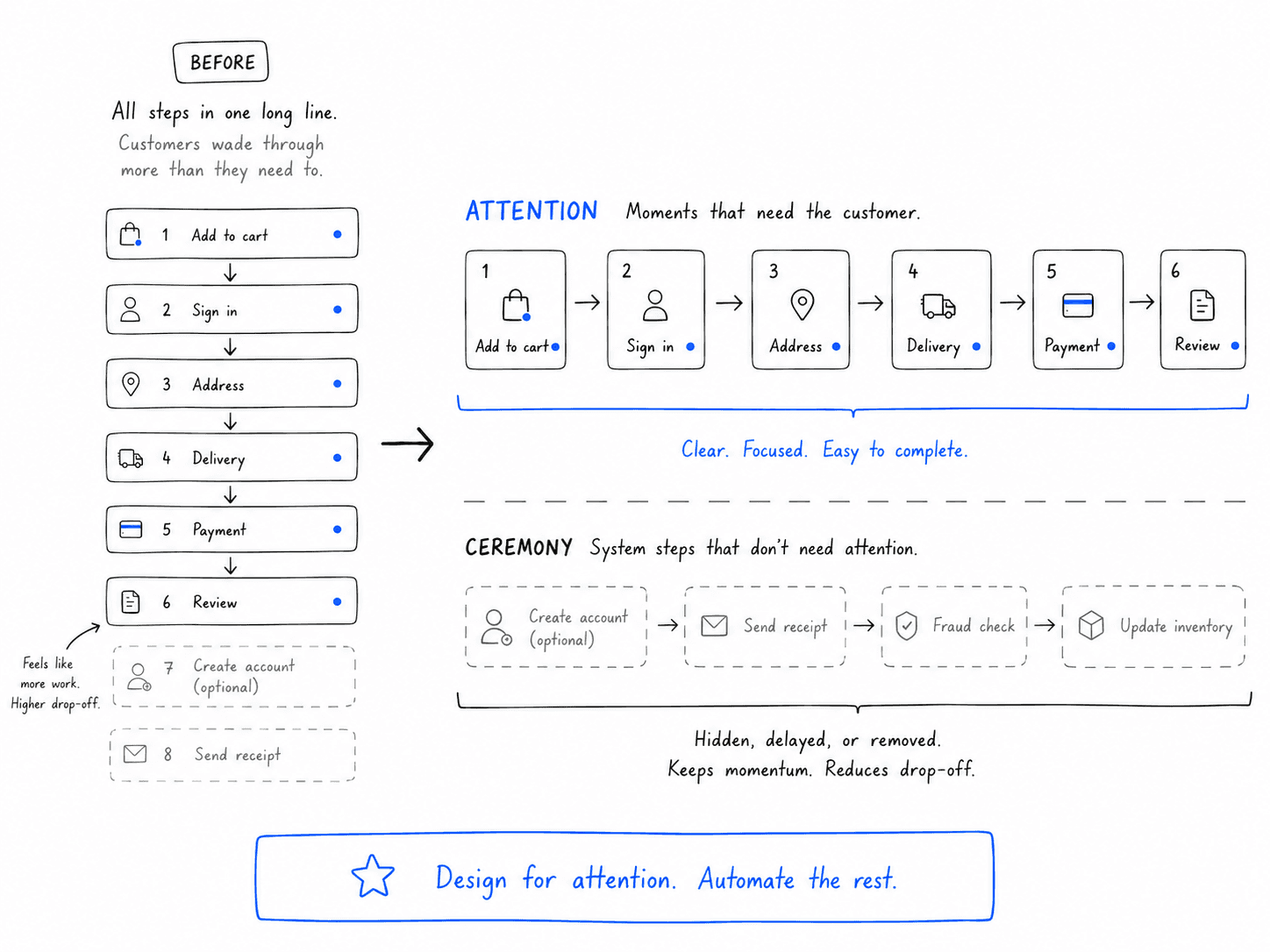
Every step made sense from a platform perspective. Together they created unnecessary cognitive load.
Separating attention from ceremony
I mapped the journey by separating moments that genuinely required customer attention from moments that primarily served the platform.
Some steps needed to stay because they created trust or supported consent. Others could be moved, combined, delayed, or removed entirely.
The work was not about making the flow shorter for the sake of speed. It was about making every remaining step earn its place.
Why this mattered
Reducing screens wasn't the objective.
The business goal was to introduce a new payment method without making checkout feel unfamiliar.
Success meant balancing compliance, trust, and bank authentication while preserving the speed and confidence people expect when completing a purchase.
Design Outcome
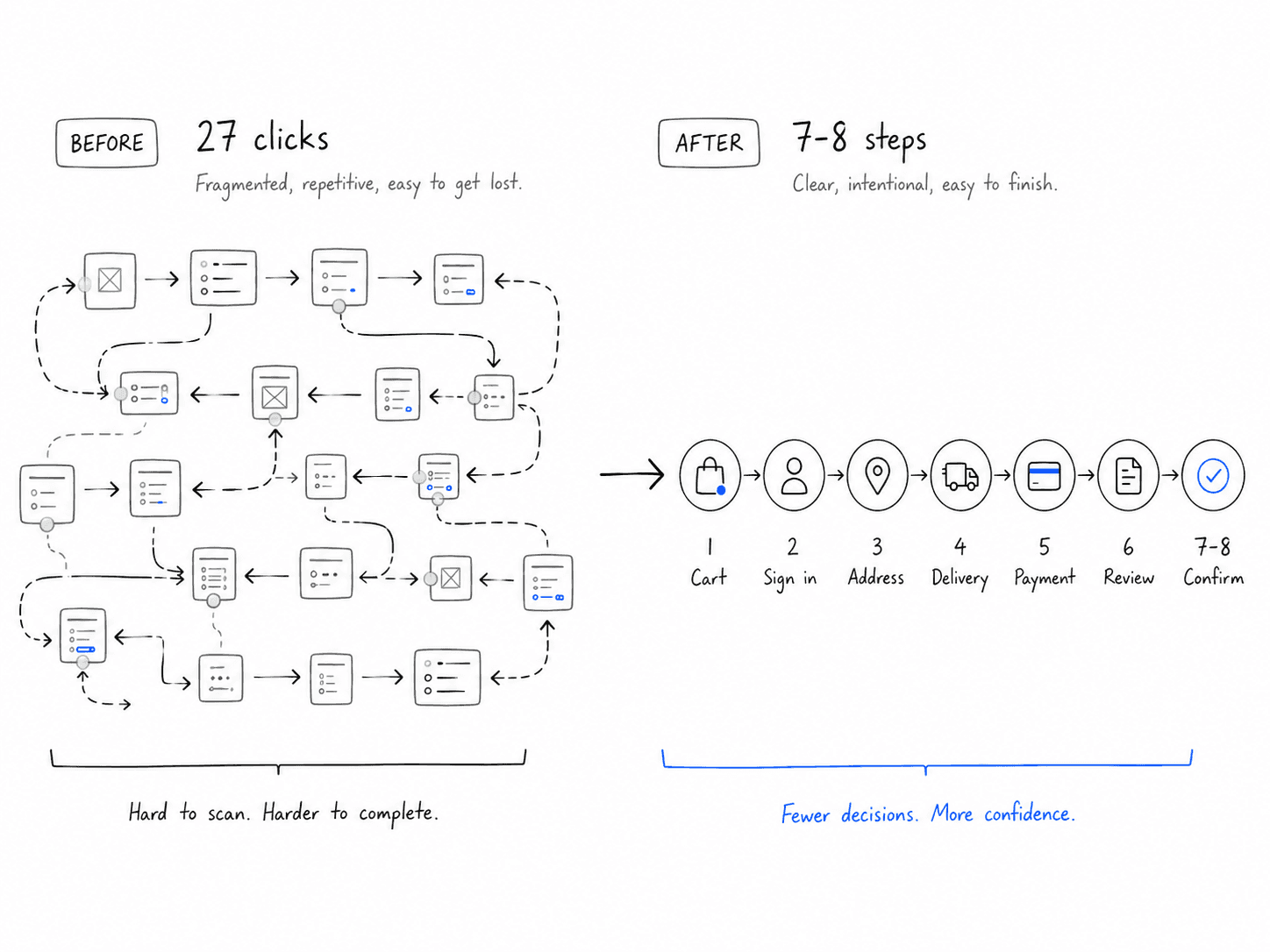
Journey reduced from ~27 interactions to 7–8 meaningful moments
Duplicate review screens removed
Consent repositioned closer to decision making
Email verification deferred
Stronger continuity across merchant → Konek → bank
Recognition beats reading
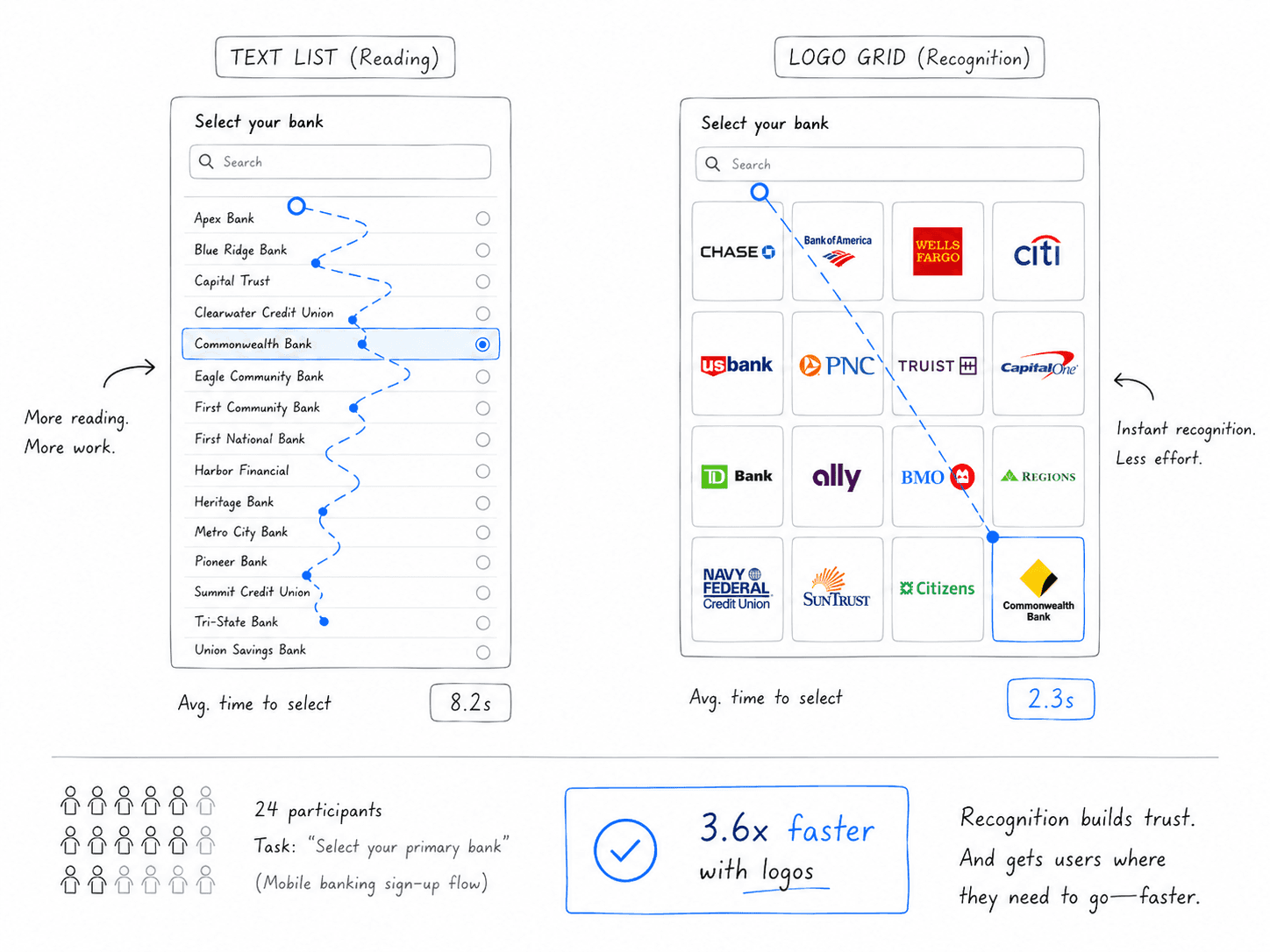
One of the most important parts of the experience was the bank selector.
On the surface, it looked like a simple selection screen. In reality, it carried a major trust moment. Customers were being asked to pay in a new way, so recognition mattered.
We explored dropdowns, search-first patterns, long lists, and logo grids. The logo grid worked best because people recognize their bank faster than they read its name.
That made the selector feel less like navigation and more like a familiar anchor inside a new payment experience.
Trust your device
Passkeys needed the same level of care.
Most customers do not think in authentication models. They think in moments: can I continue, is this safe, what is my device asking me to do, and will this work next time?
The passkey experience needed plain language, personal-device guidance, and reassurance around biometric privacy. The goal was to make passkeys feel like a natural extension of checkout, not a technical requirement dropped into the middle of payment.
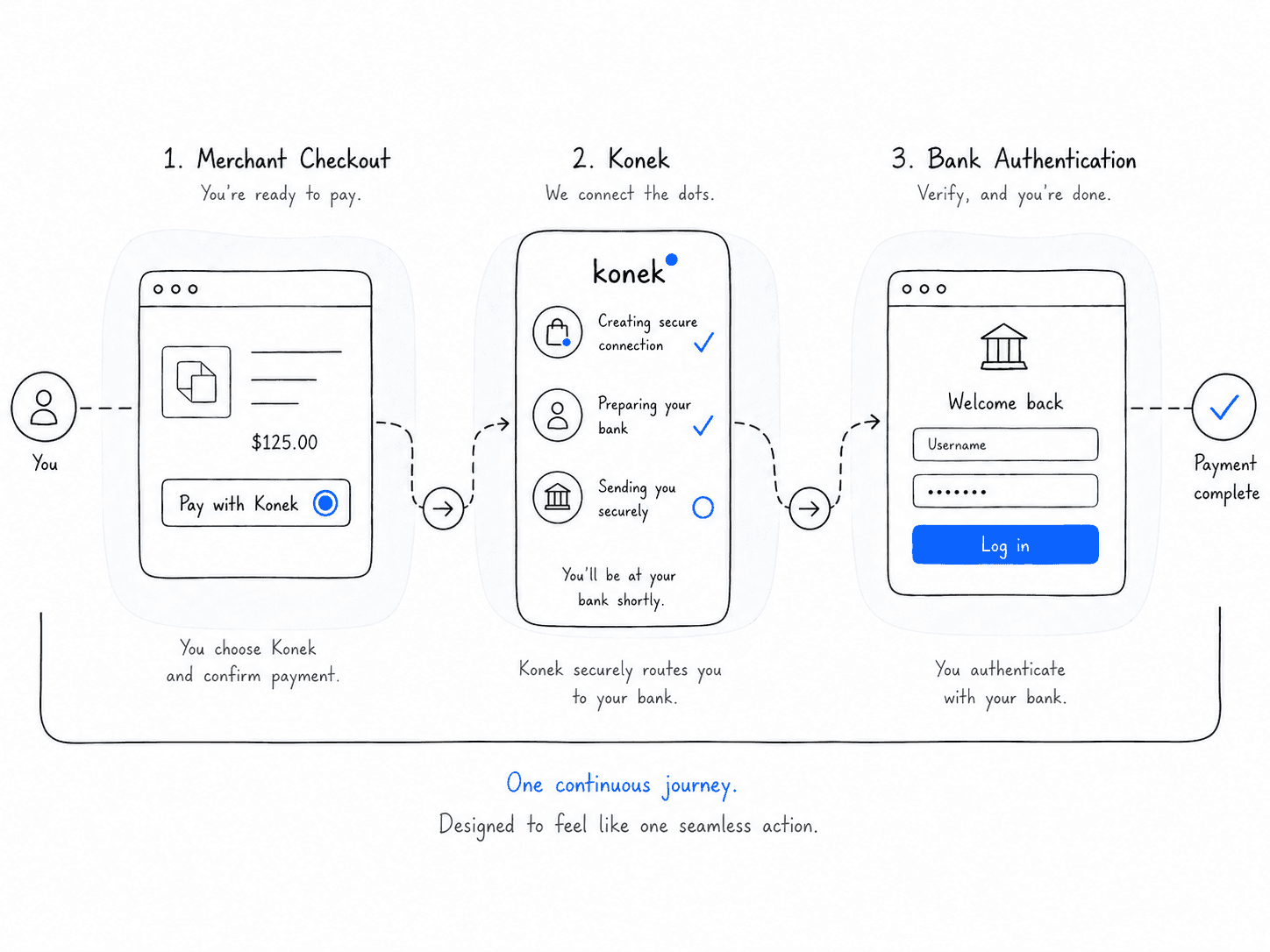
The handoff had to disappear
The hardest part of pay-by-bank is that Konek does not own the entire journey.
The customer starts in a merchant checkout, enters Konek, authenticates with their bank, and returns to complete payment.
Technically, that is a multi-system flow. Emotionally, it needed to feel like one connected action. The transition language, loading states, bank selection, return state, and confirmation all had to support that continuity.
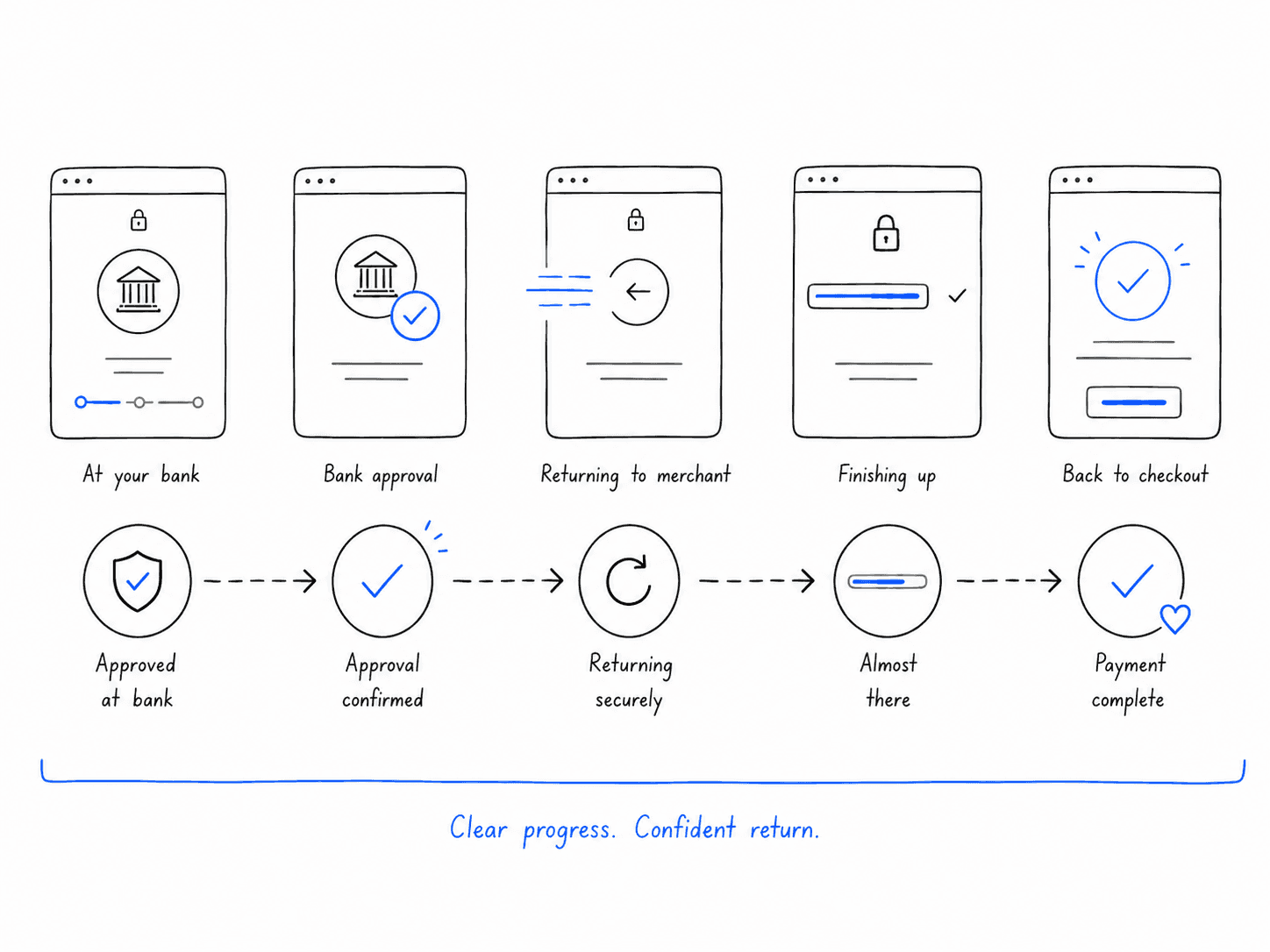
The return moment
The return from bank authentication was one of the most sensitive moments.
The customer had just approved something with their bank, so a vague spinner or unclear loading state could create doubt.
The return state needed to feel connected to the action that had just happened. We explored ways to make confirmation feel more confident, using clearer status language, stronger visual hierarchy, and motion that helped the payment feel like it was resolving rather than waiting in uncertainty.
Clearer feels safer
The visual refresh also mattered.
A lot of financial products try to feel safe by becoming dense, conservative, and over-explained. I wanted Konek to feel safer by feeling clearer.
The interface moved toward stronger hierarchy, more breathing room, simpler decisions, and a calmer visual system.
The goal was not to make the product feel trendy. It was to make it feel current and cared for. In financial products, polish matters because trust is affected by the small details.
Business Impact
The redesign established a simpler foundation for Konek Checkout while creating reusable interaction patterns that could scale across future payment experiences.
Journey reduced from ~27 interactions to 7–8 meaningful moments
Bank selection optimized around recognition rather than recall
Passkey onboarding rewritten around customer language
Merchant → Konek → bank transitions became more cohesive
Introduced reusable checkout patterns for future payment products
See it in action


